&geometry(392x90) "Quality Vet Care")
At Quality Veterinary Care Centre (QVCC), we view dentistry as a critical part of gold-standard preventative care. Our approach combines meticulous cleaning and diagnostics with an unwavering commitment to patient safety, utilising our dedicated Dental Theatre and advanced equipment, including dental X-ray. From preventative health advice to Comprehensive Oral Health Assessment and Treatment (COHAT), we ensure your pet enjoys a healthy, pain-free, and smiley life.
PET DENTISTRY
Gold-Standard Oral Health for a Happier, Healthier Life
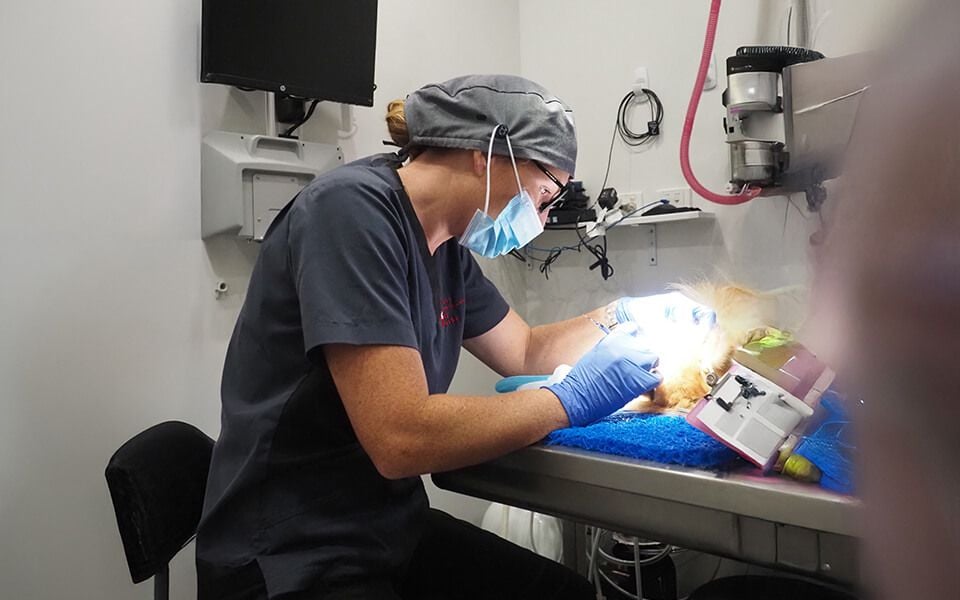
Dental disease is the most common health concern we see in pets, yet it is often invisible to owners.
THE SILENT THREAT: WHY DENTAL CARE IS CRITICAL
Many dogs and cats over the age of three suffer from some form of dental disease. Unlike humans, pets often mask pain, meaning issues can become severe before they are detected. Dental disease is far more than just bad breath; it is a serious health risk.
Beyond the Mouth: Dental Disease Affects Major Organs
The most critical reason for proactive dental care is to protect your pet's internal health. When advanced calculus and tartar sit on the teeth, they are literally cakes of bacteria.
- Heart Disease: The constant infection and inflammation caused by dental disease allow bacteria to enter the bloodstream. This can travel to major organs, potentially causing serious conditions like endocarditis (infection of the heart valves), which can be fatal.
- Kidney and Liver Damage: Over time, the continuous exposure to high levels of bacteria and chronic inflammation forces the liver and kidneys to work harder, leading to potential long-term damage and organ failure.
- Chronic Inflammation: When the body is constantly fighting an infection in the mouth, it remains in a continual state of inflammation. This can exacerbate other conditions, compromise the immune system, and contribute to overall poor health.
Recognising the Signs of Dental Disease
Because pets hide pain, regular checks are essential. However, if you notice any of the following symptoms, please book an appointment immediately:
- Bad Breath (Halitosis): The most common sign of bacterial build-up.
- Change in Chewing or Eating Habits (e.g., dropping food, chewing on one side).
- Reluctance to Eat Hard Kibble or Chew Toys.
- Inflamed, Red, or Bleeding Gums.
- Yellow/Brown Tartar Build-up on Teeth.
- Excessive Drooling or Pawing at the Face/Mouth.
- Change in Behaviour (e.g., lethargy or irritability due to chronic pain).
THE QVCC GOLD-STANDARD DENTAL PROCEDURE (COHAT)
Because your pet will not sit still for a thorough assessment, the Comprehensive Oral Health Assessment and Treatment (COHAT) must be completed under general anaesthesia. Our procedure is designed for maximum safety, precision, and pain management.
1
Safety and Preparation
Safety is our primary concern, ensuring the anaesthetic process is as risk-free as possible:
- Pre-Anaesthetic Bloods: We offer and recommend pre-anaesthetic blood work to check vital organ function (kidneys and liver) before the procedure, helping us tailor the safest anaesthetic plan.
- Mandatory IV Fluids: All dental patients are placed on intravenous fluids throughout the procedure and recovery. This supports blood pressure, organ function, and provides instant IV access for safety.
- Anaesthetic Monitoring: Your pet is continuously monitored by both a veterinarian and a qualified nurse throughout the entire anaesthetic, tracking heart rate, ECG, blood pressure, oxygen, and Capnography (CO2).
2
Full Oral Assessment and X-Rays
A simple visual exam only reveals issues above the gum line. Our gold-standard approach requires a deeper assessment.
- Probe and Hand Scaling: The mouth is manually assessed, charting any pocketing, gum recession, and visible disease.
- Dental Radiology (X-Ray): This is non-negotiable for quality care. Dental X-rays reveal the 60% of the tooth structure hidden beneath the gum line, identifying painful root abscesses, bone loss, and unerupted teeth that are invisible to the naked eye. This ensures we don't leave any painful problems behind. This is only done when needed or advised.
3
Cleaning, Extractions, and Polishing
Based on the findings, we perform the necessary treatments.
- Ultrasonic Scaling: A professional ultrasonic scaler is used to remove tartar and calculus efficiently and gently.
- Surgical Extraction: If X-rays confirm a tooth is diseased or fractured beyond repair, it is surgically extracted with minimal trauma, followed by careful closure of the site. We use a high-speed drill, where necessary, for clean, precise removals.
- Polishing: Every tooth is polished after scaling to smooth the surface, making it much harder for plaque to adhere in the future.
WHY OUR DEDICATED DENTAL THEATRE MATTERS
Our Dedicated Dental Suite and Ward is a vital part of our commitment to safety and quality care
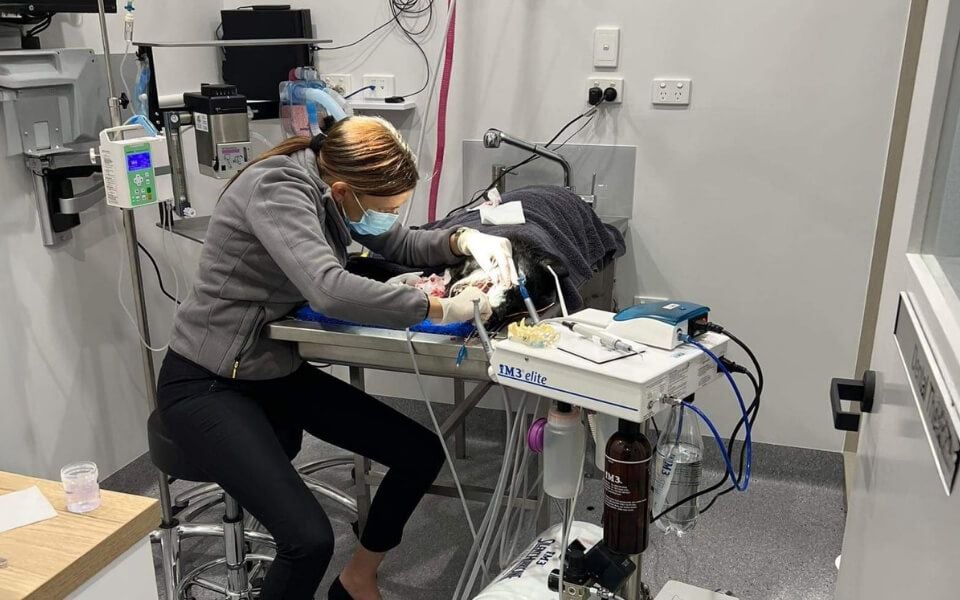
- Infection Control: Dental procedures release large amounts of bacteria into the air. By isolating the dental suite from our two main surgical theatres, we prevent the risk of transferring this bacteria to patients recovering from sterile orthopaedic or soft-tissue surgeries.
- Dedicated Ward: Dental patients remain in their own bank of cages within the Dental Ward throughout the day. They do not share wards with post-operative surgical patients, dramatically reducing cross-contamination risk.
- Advanced Equipment: This theatre is fully equipped with its own dedicated dental X-ray, professional scaler, polisher, and surgical tools.
PREVENTATIVE DENTAL CARE AND PRODUCTS
Preventative care can extend the time between professional cleans and promote long-term oral health.
- Annual Checks: We recommend a comprehensive dental check at least annually (often conducted during the vaccination appointment). This allows us to catch calculus build-up and disease early, often leading to a simple clean rather than costly extractions.
- Home Care Guidance: Our team is extensively trained to consult on the best home care options, including:
- Brushing: Daily brushing is the gold standard for removing plaque.
- Dental Diets and Chews: Specific veterinary-grade foods and chews designed to mechanically scrub the tooth surface as your pet eats.
- Water and Food Additives: Products that contain enzymes to break down plaque and reduce bacteria in the mouth.
Our philosophy is to help you maintain your pet’s oral health between professional treatments, giving you the tools to succeed at home.
CONSULTATIONS AND NEXT STEPS
We are here to help you assess your pet's needs and formulate a long-term plan.
- Nurse Consultations: If you are unsure whether your pet needs a COHAT, you can book a nurse-only appointment. Our qualified nurse can perform a basic oral exam, grade the level of dental disease, discuss symptoms, and gather information. The nurse will then consult with a veterinarian to recommend the next steps.
- Comprehensive Assessment: If significant issues are found, we will guide you through booking the full COHAT procedure, including scheduling pre-anaesthetic bloods and providing clear instructions for the procedure day.
We believe that early intervention is key. Dealing with calculus now can save a tooth from needing extraction next year.